
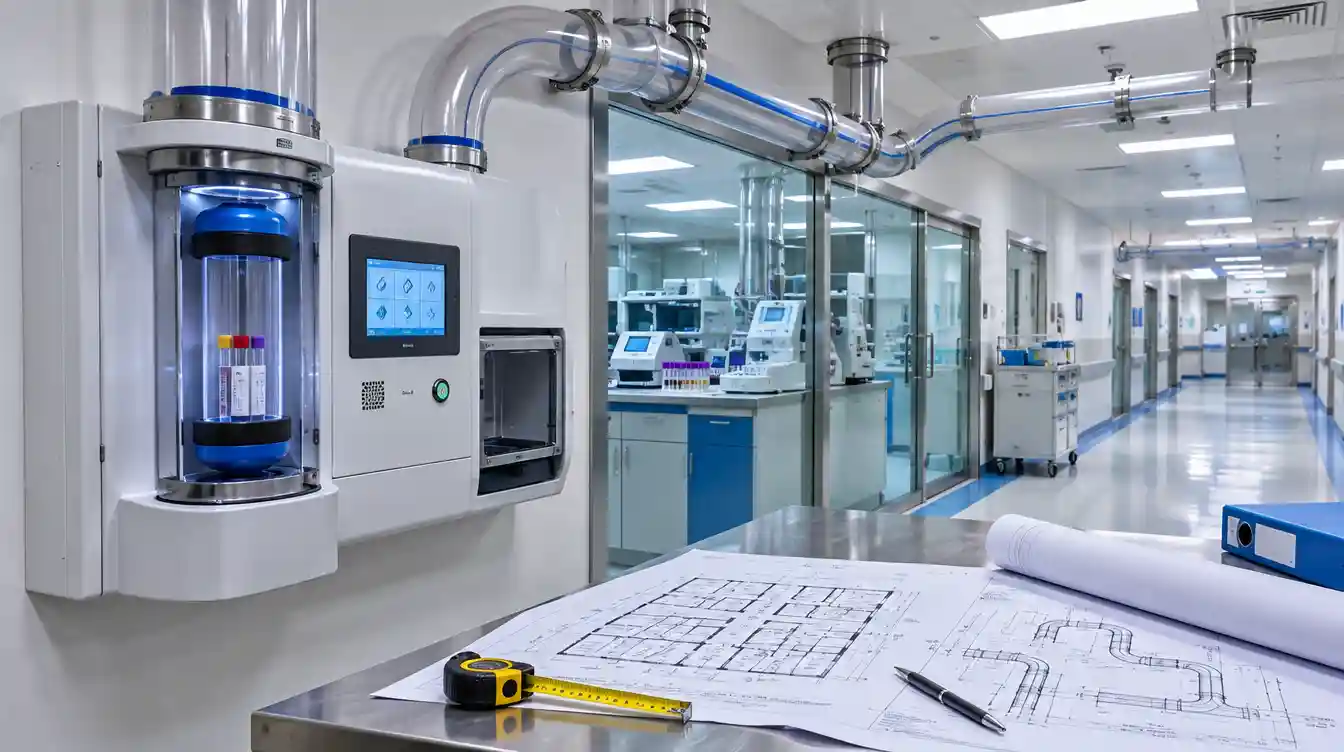
A guide to the benefits of pneumatic tube system installation is one of the most significant investments in infrastructure a hospital can make. Pneumatic transportation solutions allow laboratories, pharmaceuticals, healthcare and other vital items to be moved between different departments and locations efficiently without being carried by manual means. When you are considering hospital pneumatic tube system installation, you need to carefully think through your building's readiness, technical requirements, departmental needs and project costs before selecting a supplier.
Pre-installation planning assists hospitals in planning any future installation and reveals potential issues before work commences. Inspection of the building's structure and the different options for installation routes, electrical supply, and department needs can avoid inappropriate routing and extra costs. It also assists in avoiding pneumatic tube system installation requirements delays and disruption to the hospital. Knowing what transportation requirements will be from the beginning allows the hospital transport system to make the correct selections in systems and plan how much time is needed for the project.
Prior to engaging in a pneumatic tube system installation, hospitals should evaluate the following site, operational and technical requirements to determine whether the suggested hospital pneumatic transport system is suitable to address their transportation and infrastructure needs.
A thorough review of the hospital layout is critical to assessing the viability of a pneumatic tube routing. Site crews need to examine floor plans, available shafts, ceiling voids, penetrations for walls and routes between departments. Fire compartmentation and routes for future access and maintenance need to be factored into the planning process. Working with the hospital's civil, electrical and MEP teams will establish the hospital's limitations and complete a pneumatic tube system layout that's right for your hospital, avoiding superfluous building work.
It is necessary to determine from what departments the hospital wants to transport items, e.g. labs, pharmacies, emergency, ICUs and other departments. Their number of carried and expected number of user trips per day, their traffic during peak hours and their size indicates the number of stations and the dimension of the network. The major demands of the hospital departments assist in a successful Hospital pneumatic tube system design.
Pneumatic tube system components like blowers, stations, and control panels require power. This is a significant consideration since hospitals should ascertain power availability at the installed locations and have a contingency power backup plan through optional UPS connections with the supplier. Further, check network connectivity, control, and monitoring requirements, which will determine the pneumatic tube system power requirements.
The hospital sample transport system is critical to help the hospital maintain the safety of infection control as a priority. The hospital needs to determine what materials are approved for transportation and determine if the carrier is compatible with the system. Ensuring the pneumatic tube system safety uses secure loading and handling and the carriers' ability to contain and handle a spill along with basic cleaning. It is critical that the clinical materials are validated to ensure their sensitivity.
As with a pneumatic tube system price there is no one size fits all pneumatic tube system installation cost, the system cost will be dependent on the needs of the hospital including:
Additional cost may be incurred for additional control and electrical services, monitoring, line network services, commissioning, staff training, testing etc. Hospital's need to take into account site services, spare parts, support, network development and maintenance etc. in considering the pneumatic tube system price being quoted.
It is critical to choose a reliable supplier for the system. Hospital operators should evaluate pneumatic tube system suppliers and Pneumatic tube system manufacturers in India like Airox Technologies based on their technical strengths, project history and after-sales support. Questions to ask before finalising a provider are:
Assessing these factors is a key part in selecting the best pneumatic tube system suppliers to assist a hospital with a pneumatic tube system project.
Before the system is handed over, hospitals should make sure that the pneumatic tube system testing has been correctly tested and commissioned. Individual stations should have been checked, tube routes confirmed and carrier tracking tested, and the operation of the system under normal operating conditions validated. Also checked should be fault handling, emergency procedures, and the tested payloads. Installation providers should have trained hospital staff on the loading of the carriers, system operation, and simple troubleshooting.
Airox Technologies offers solutions for pneumatic tube systems at hospitals, with customised solutions based on the project requirements. The hospital can look at solutions ranging from system layout planning, installation, commissioning and technical support. Features that can be selected include real-time tracking of carriers, customised routing configuration and optional UPS integration depending on the required systems.
Airox Technologies is a strong supporter of efficient internal transportation and takes care of hospital infrastructure and operational requirements, you can see the pneumatic tube system for the system features and project-specific help from the leading pneumatic tube system manufacturers in India.
A pneumatic tube system installation takes a lot of planning and research. It requires a feasibility study, technical design and assessment of suppliers. Hospitals must consider the operational requirement of the system, safety and build approval, along with the commissioning process before implementing the project.
For additional information on installing an Airox Technologies hospital pneumatic tube system, call us to request a project quote. |
Pneumatic tube system installation time varies depending on how prepared the building is, how difficult the routing is, number of stations, any infrastructure modifications, and any commissioning needs. A site assessment is necessary to understand a realistic timeline for the project.
Yes. Retrofitting the pneumatic tube system for existing hospitals will be considered following a feasibility survey. Retrofit routing and required changes to hospital infrastructure can be designed to cause the least disruption to clinical services.
Pneumatic tube system maintenance is based on the evaluation of carriers, tubes, blower units, sensors and stations as part of a routine service. Updating, washing and preventive performance tests with the software are also regular program items to ensure operational safety.
A pneumatic tube system is an automated material transport system that uses air pressure and vacuum technology to propel transports through a network of tubes. It can efficiently move samples, documents, medicines, cash, and other items to and from various areas of a facility.
Prior to installation, elements like the building arrangement, transportation needs, stations in addition to the routing of the tube, load capability and growth needs should all be taken into consideration. The engineer is capable of making sure the system operates as it should, materials are handled with ease and disruption is kept to a minimum as well as the system has a lengthy service life.
Airox Technologies offers tailored pneumatic tube system solutions including project specific planning, system design, installation and commissioning assistance. Airox Technologies's solutions are optimized for the internal transportation requirements of hospitals, laboratories and healthcare facilities to ensure that their internal logistics can be managed smoothly with innovative, reliable automated transportation of materials.