
VPSA oxygen system in the large industrial operations require a reliable source of oxygen for continuous operation, combustion, oxidation and treatment. Relying completely on cylinders or liquid oxygen to meet the demand under high consumption and long hours of operation can be a headache from a logistics standpoint.
VPSA oxygen generation system technology for oxygen generation on site using the atmospheric air as feed gas is suitable for providing industrial oxygen in the required industrial process flow, purity and operating time. This technology is applicable to industrial applications where an uninterrupted oxygen supply is critical.
Oxygen supply for other oxygen using industries oxygen consumer industries These industries are in need of an oxygen source that will not demand any unnecessary downtime of production. A reliable bulk industrial oxygen supply source will remedy the issues of continuous or oxygen-demanding processes. External industrial oxygen suppliers may require the movement and storage of oxygen cylinders and bulk liquid oxygen, and delivery scheduling.
The continuous generation of oxygen on-site will further reduce dependencies by supplying oxygen as per the process requirements. Flow, purity, working hours, demand variation and possible future plant expansion will have to be considered for large industrial oxygen requirements.
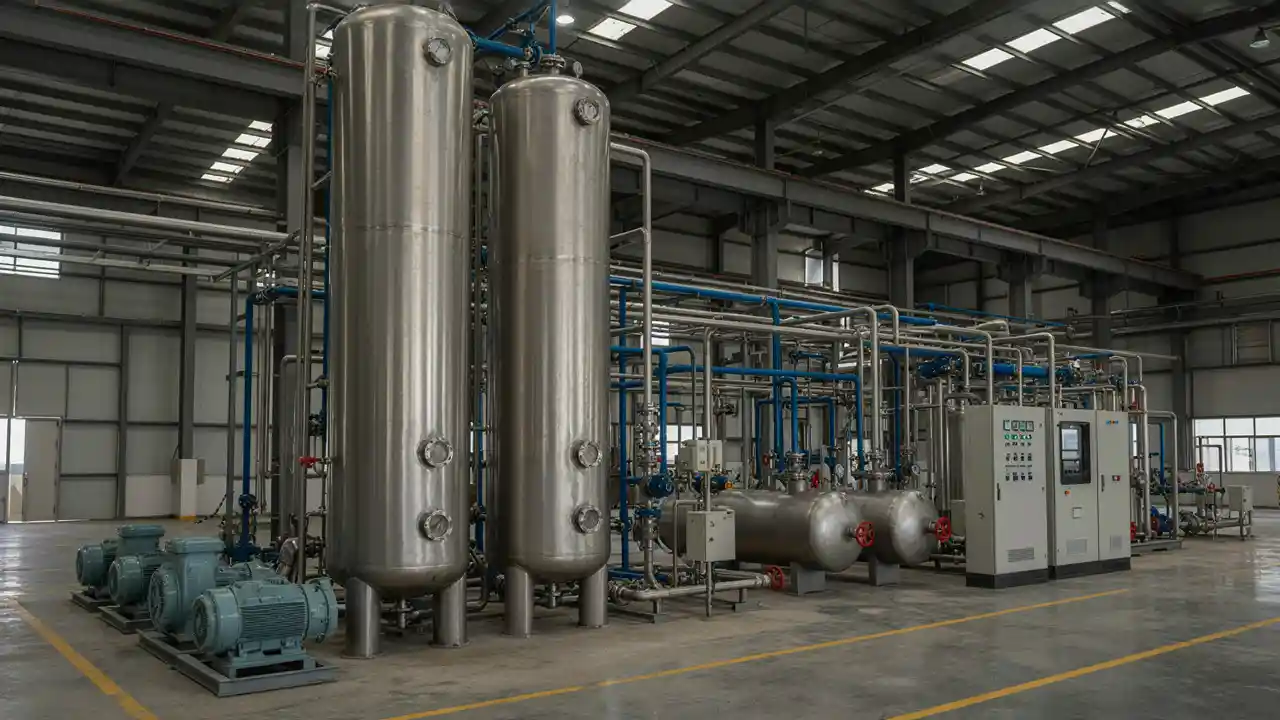
How does a VPSA oxygen generation system work? The VPSA system removes the oxygen from the atmospheric air by using vacuum pressure swing adsorption (VPSA). The VPSA system takes compressed or pressurised atmospheric air and pushes it through adsorption vessels, which contain an adsorbent media which captures the nitrogen and the oxygen rich gases pass through. When the media gets close to its working capacity, the system depressurises and then draws a vacuum to regenerate the media. The gases are pumped out of the vessel ready to start another adsorption cycle.
Several units run in duty/standby alternating cycles so that the adsorber and regenerator is never switched off and continued operation is ensured. Operating in cycles provides a stable flow of oxygen, compared with a "batch" process. Consequently, the process system can be designed to match the flow, purity, operation cycle and conditions for the plant.
How does onsite oxygen generation help? Rather than using cylinder replacements or scheduled delivery of liquid oxygen, an onsite oxygen generator allows you to produce oxygen at the site itself. With onsite production oxygen is supplied to ensure a seamless process, all while lowering continuous oxygen supply frequency.
The high capacity oxygen generator can be installed as per plant flow rate of oxygen and the condition of the plant. A VPSA can be designed to operate for varying plant demand, which can facilitate a closer match of the capacity of an industrial oxygen generator installation.
Why is a VPSA oxygen system ideal for a high-demand facility? It operates at low pressures when compared with many other gas-separation processes. Vacuum regeneration is also possible for the regeneration of the adsorption media for future use. The vessel switching, pressure, oxygen monitoring and equipment operation can be performed automatically with minimal operator intervention.
Large plant considerations may include energy efficient oxygen generation (due to the continuous run time), on-site generation can minimize some logistics, handling, and storage requirements for supplied oxygen. When engineered correctly, an Industrial VPSA oxygen generator supplies a continuous oxygen supply to a plant that is sized based on process flow, purity, number of hours to run, and demand.
Historic Fact: “The concept behind Pressure Swing Adsorption (PSA) gas separation developed during the 20th century as industries sought more practical ways to separate gases. VPSA later evolved the process by combining pressure adsorption with vacuum regeneration, supporting efficient on-site oxygen generation for large industrial applications.”
Various industries use oxygen in the processes of burning, oxidation, refining, processing and treatment. Consequently, VPSA oxygen is used in various industries where a consistent flow, or high-volume output, of an industrial oxygen generation system is desirable.
The burning process, oxidation and other high temperature steel and metal treatments make use of the Oxygen. Why VPSA oxygen for steel industry? VPSA oxygen can be an on-site oxygen generation for steel plant facilities that need high and continuous oxygen flow.
Oxygen enriched combustion provides benefits to optimize the combustion environment for furnace and glass melting. VPSA oxygen for glass industry should be considered when a continuous supply of oxygen is needed for industrial furnace applications.
There are different ways to use oxygen to enhance both pulp processing and bleaching. If your paper mill has a use for an on-site supply of oxygen for processes that have high levels of oxygen demand over long operating periods, a VPSA oxygen plant may be suitable.
Oxidation reactions, chemical processing and biological wastewater treatment oxygen generation for chemical industry can facilitate high-volume, continuous processes. With VPSA oxygen for wastewater treatment, you can supply oxygen directly to your site that has ongoing needs for aeration or oxidation.
Whether on-site VPSA vs oxygen cylinders is optimal depends on consumption, hours of operation, storage and delivery needs. Compare the main differences given below:
| Factor | VPSA Oxygen System | Conventional Oxygen Supply |
|---|---|---|
| Oxygen source | Generated on-site from atmospheric air | Supplied through cylinders or liquid oxygen deliveries |
| Supply continuity | Supports continuous on-site generation | Depends on timely refilling or deliveries |
| Storage | Lower dependence on stored oxygen | Requires cylinder or liquid oxygen storage |
| Logistics | Reduces routine transportation requirements | Requires handling and scheduled deliveries |
| High-volume use | Suitable for sustained industrial demand | Can require frequent replenishment at high consumption |
For the so called steady state buildings, VPSA oxygen system can provide significant increase in supply independence and dependency on industrial oxygen supply delivery. The most suitable one can be chosen based on oxygen needs, purity, operational hours, utilities, and site considerations.
Before VPSA oxygen system selection, the oxygen flow and purity needs to be calculated. The amount of oxygen consumed daily as well as daily operating hours, which are used to calculate VPSA oxygen generator capacity. Do not design based on average loads - take into account load fluctuations.
Other considerations are the availability of electrical utilities, available space for the oxygen plant, operating conditions, level of automation required, maintenance arrangements and accessibility for maintenance. Future expansion of production capacity should also be taken into consideration so that the plant does not become undersized as demand increases. It is recommended that these VPSA plant requirements are discussed with the system supplier like Airox Technologies.
If your industry needs a high volume and constant flow of oxygen, a VPSA oxygen generation system is a viable choice. The site production of oxygen helps the VPSA oxygen supply to reduce dependence on oxygen trucks and also ensures continuous industrial operation. Analysis of site requirements in terms of capacity, purity, demand profile, utilities and future capacity expansion helps one select the right system.
|
If you are searching for an industrial oxygen generator company, then Airox Technologies is the right choice as they offer an oxygen plant that can be used for oxygen-generation plants. |
A VPSA oxygen generation system separates oxygen from atmospheric air using vacuum pressure swing adsorption and produces oxygen on-site for industrial applications.
A high capacity VPSA oxygen system can provide continuous oxygen production and can be engineered for substantial flow requirements while using a low-pressure adsorption and vacuum-regeneration process.
Common VPSA oxygen applications include steel and metal processing, glass manufacturing, chemical processing, paper and pulp operations, and wastewater treatment.
Yes. Appropriately engineered VPSA systems use alternating adsorption and regeneration cycles to support continuous oxygen generation for industrial operations.
VPSA oxygen generator capacity depends on required oxygen flow, purity, operating hours, demand variation, current consumption, and potential future expansion.
Airox Technologies provides customized VPSA oxygen systems designed for continuous industrial oxygen generation, with turnkey engineering, installation, commissioning, and after-sales support.