
Breathing oxygen has an important medical and industrial significance – many use a certain amount of oxygen in a process, but the pressure should be within a certain range. When the pressure from the generator or reservoir is not enough, an oxygen gas booster can provide the additional pressure needed. These are suitable for filling of oxygen cylinders, transferring oxygen through a system or any other industrial application with a high-pressure oxygen system. When selecting an oxygen booster, look at the pressure and flow rate, pressure requirement and operating pressure and requirement and oxygen safety considerations.
Oxygen generators and storage systems supply oxygen at a certain pressure, however the downstream devices might require a higher pressure. This may affect the way you store, transfer or use oxygen. An Oxygen pressure booster can be used to overcome this difference by boosting the existing oxygen pressure.
The PSA oxygen generator makes oxygen for healthcare and industry, but its delivery pressure may not be high enough to fill high-pressure cylinders. The Oxygen gas booster is a device that can boost the oxygen pressure to the level you need when matched to your generator, booster and filling system. The ease and control of delivery on demand with gas boosters is particularly advantageous for introducing gas into storage tanks or for delivery to equipment operating at a different pressure. The right booster has to be carefully selected for the flow and pressure needs of each application.
How oxygen gas booster works? Is the most common question everyone has, the working process of an oxygen gas booster is designed to boost or pressurize oxygen from a generator, pipeline or other oxygen source. The oxygen enters the booster at a predetermined pressure. It is then compressed by the booster before being pumped to a system.
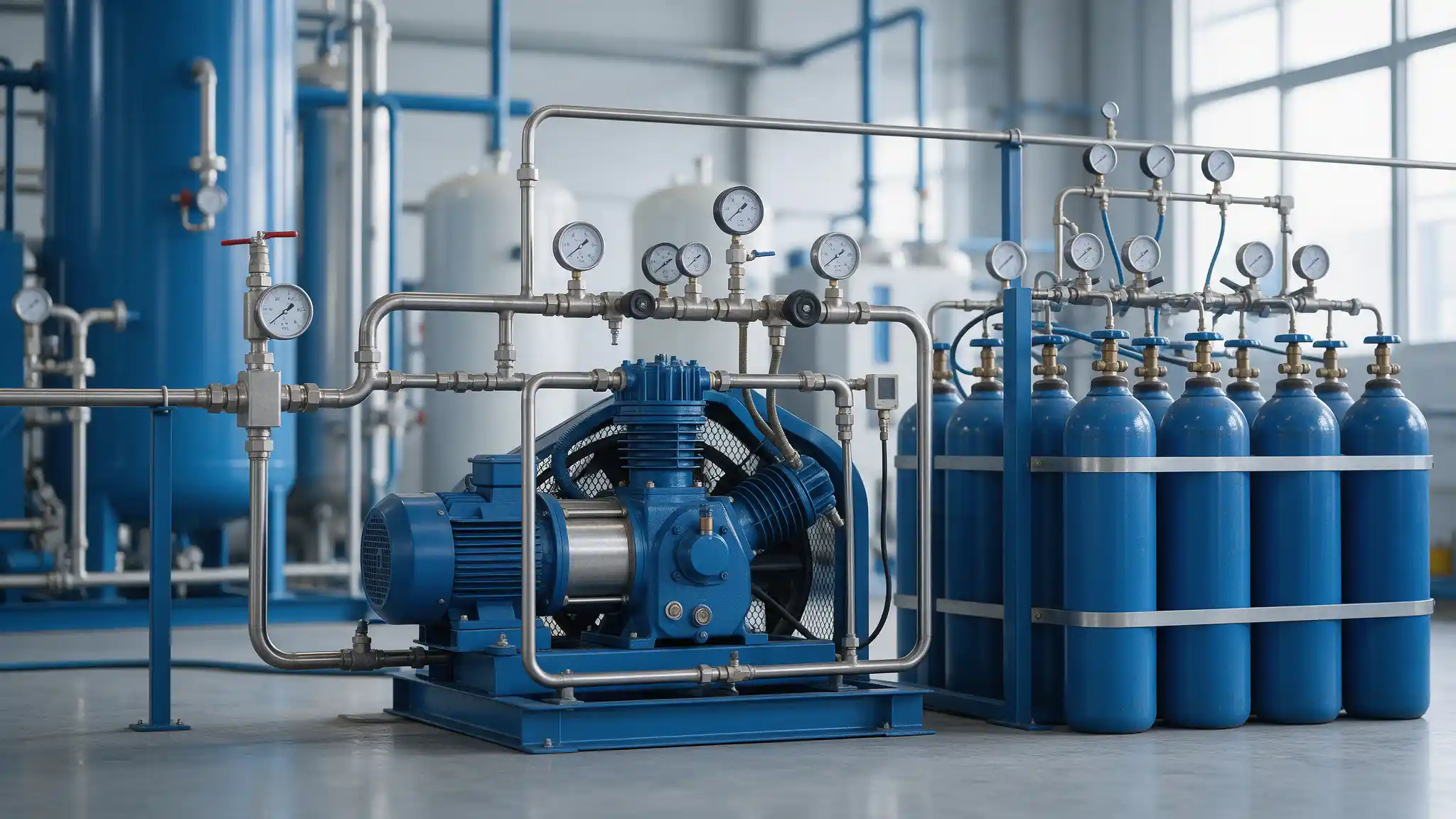
This can depend on the booster design. Some will use a reciprocating design while others will use a different compression setup for oxygen service. Equipment used for oxygen service should be equipped with suitable materials, seal design, lubrication and operating control. A compressor type booster or an Oxygen booster pump can supply the required pressure for filling cylinders or for industrial use. Pressure gauges, regulators, relief devices, and appropriate control systems enable operation. The system operates within the device's set temperature and pressure limits.
Oxygen pressure booster usually consists of a fairly straightforward procedure – oxygen flows into the booster at the supply pressure. Then, the oxygen gas compression unit raises the pressure. Afterward, the boosted oxygen exits via the outlet line to the device or other storage system. Pressure controls and safety devices keep the process running within set parameters.
Oxygen cylinders are filled with a pressure specified by the volume of the cylinders as well as its oxygen consumption. It's common for oxygen generators to operate at pressures below what cylinders need to be filled with, in which case an oxygen cylinder filling booster can be used.
The oxygen gas booster takes in supply gas from a compatible source and then compresses the gas and sends it down the line to the filling manifold. The system can potentially fill several cylinders through appropriate distribution and control devices. An appropriately sized booster can maintain the necessary filling pressure and oxygen transfer efficiency. It must be correctly sized for the oxygen source available, number and size of cylinders, and time required for fill.
The booster has various uses where oxygen pressure available is to be boosted to a required level.
Determine the specification of your oxygen booster you will require. This will include oxygen purity, pressure, flow and environmental conditions for each of your applications. Make sure you do not assume an industrial booster will do the same job as a medical oxygen booster.
Using maximum pressure alone when selecting a booster can lead to operational problems or potentially hazardous situations. There are a significant number of technical considerations that must be taken into account before selecting an oxygen booster system.
Installation may also include ventilation, leak detection, piping and operation. Only personnel trained in the installation and commissioning of an oxygen system shall install or commission an oxygen system.
As in other users of oxidants, all kinds of combustibles are involved in the oxygen environment; oil, grease and other unrelated substances are equally necessary to focus on the solution. Your Oxygen booster safety relies on oxygen-compatible materials seals, clean components and elastomers, appropriate valve and regulator designs and properly sized pressure equipment. Safety relief devices and operating controls are selected based on the system design. Installing, maintaining, and operating oxygen compression equipment is a job for qualified personnel.
For higher pressure making an existing oxygen booster source appropriate for high-pressure specific uses as an oxygen gas booster. Here are some of the oxygen gas booster benefits:
Actual performance is influenced by engine configuration, air inlet conditions, airflow needs and maintenance. Precise sizing and safe installation are imperative to obtain these benefits.
Things to keep in mind before buying an oxygen gas booster from Airox Technologies:
Confirm that the booster specified is safe to install within an oxygen system that is highly resistant to rapid rupture.
An oxygen gas booster is used to increase the pressure of your oxygen source for the filling of cylinders, medical oxygen applications and industrial processes. When selecting the correct oxygen gas booster a great attention should be dedicated to the pressure, capacity and oxygen compatibility, and the systems safety control.
|
Consider the specifications of Airox Technologies oxygen gas booster which is suitable for your high-pressure oxygen system which includes pressure, flow, applications, as well as oxygen compatibility. |
Oxygen gas booster is used to provide oxygen pressure with a booster for cylinder filling, gas transfer or other medical or industrial process.
Yes. An appropriately rated oxygen cylinder filling booster can provide oxygen to the pressure dictated by a compatible cylinder filling system.
Yes. An oxygen gas booster can be used with a suitable PSA oxygen generator if the inlet pressure, flow rate and outlet pressure satisfy the system.
Applications are installed in appropriate healthcare oxygen systems, PSA plants, filling stations for cylinders, steel plants, chemical factories, glass processing, and metal processing.
Buyers must consider specifications for the Airox Technologies oxygen booster such as: Pressure requirements, flow capacity, application needs, and so on.