
Hospitals produce large volumes of food and organics. Waste from hospital food kitchens, patients' food services, staff canteens, and other institutional kitchens can be voluminous. Transferring waste with labour, space and sometimes multiple-handling can be laborious. An automatic waste system can organise this flow of waste by harvesting and processing food waste through a regulated system.
Food waste can be handled through transfer, crushing, heating, mixing, and reduction to volume for hospitals and other healthcare facilities, which can lead to improved organic waste handling procedures and a reduction in multiple movements of organic food wastes.
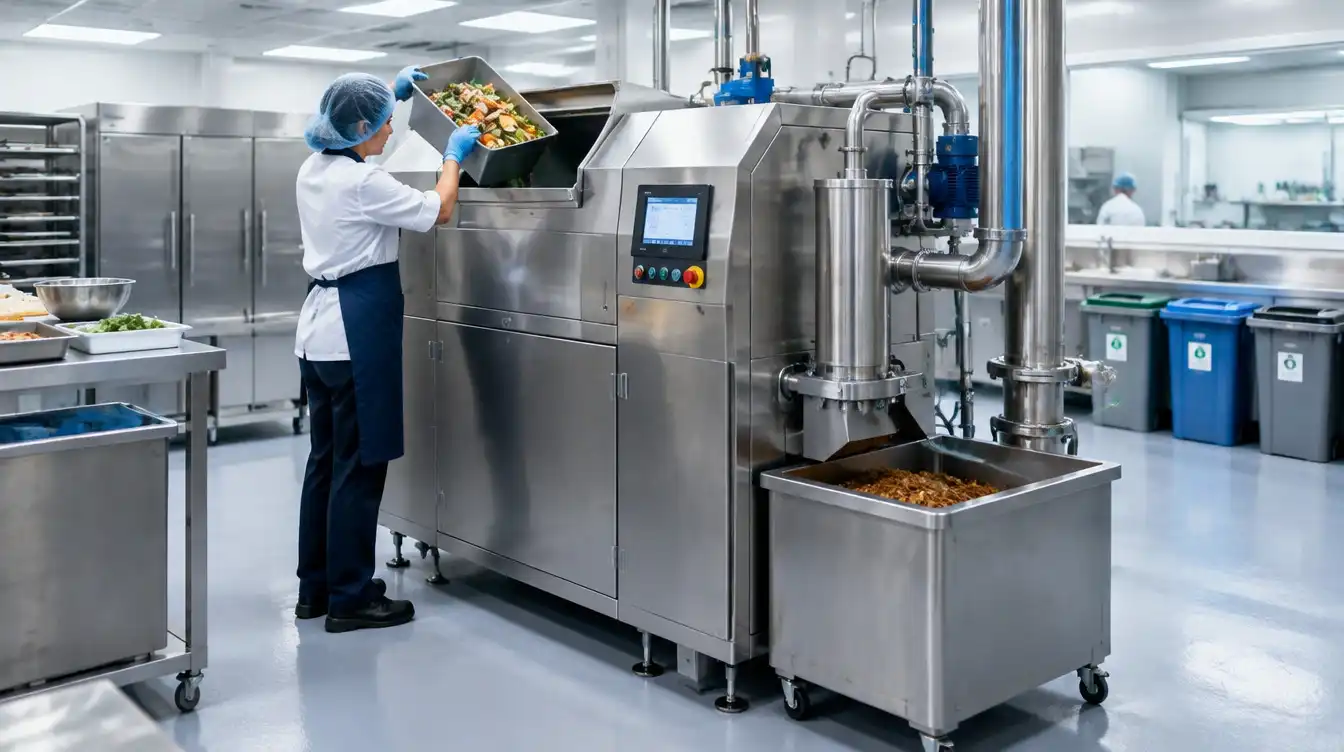
An Automatic waste system is a mechanical system built to collect, transport, and process food and organic waste produced in a location. The working process of an automatic food waste system is to collect food waste from containers and transport it to a processing center.
In some cases, the processing can involve shredding, controlled heating, in-line mixing, and de-moisturising. The processing not only helps to make the waste easier to process, but also can substantially decrease the volume of the waste to a level much lower than the original waste. The organic material may then be composted or used in other approved reuse options as appropriate, depending on the equipment used and the nature of the waste. This food waste management system is especially beneficial in those facilities where food waste is produced throughout the day.
How automatic waste system works? An automatic system involves a series of stages that move the food waste from where it is generated to where it is processed and outputted. The exact method of how this will work will depend on the type of machinery involved, the shape of the plant and the volume of food waste.
Food scraps created in hospital kitchens, patient food-service areas, and cafeterias and food prep areas are accumulated in pickups. The food waste collection system allows food waste to be separated from other types of waste at the point of waste generation. Segregation is important because this system is intended to accept only hospital food waste and organic waste, not biomedical waste or hazardous healthcare waste.
Food waste is carried to the processing section using the inlets and, if necessary, vertical/horizontal pipes after they enter the system. An automatic waste transfer system decreases repeated efforts to manually move waste containers around. A central arrangement may also assist in managing the distribution of waste throughout enormous hospital cafeterias and educational institutions.
Secondly, it is fed into the organic waste processing machine: when entering the room, the food waste is mashed into smaller particles with the assistance of the mechanical equipment. This ensures the raw materials are better uniformed, and has prepared for the next step. The food waste processing machine can automatically accomplish this step.
After the material is shredded, it is then able to be heated in a controlled fashion and continually mixed within the processing chamber. Heating helps to reduce the moisture content, and the mixing aspect allows the machine to keep the processing of the organic waste more uniform.
Meanwhile, as the processing proceeds, the moisture and other elements of the food waste are removed, leading to a smaller volume of waste overall. The food waste can then be gathered up for the composting system in approved compost facilities or other approved organic-waste processing applications. Food waste recycling and organic waste recycling will help to reduce food waste that has to go into regular waste processing.
An automatic waste system components has a series of interconnected components that control waste movement. Components may include collection inlets, pipeline systems, collection stations, processing units and air filtering or deodorization systems.
Food waste inlets are specific locations on the system where organic waste can be delivered. Systems at larger sites often include a food waste pipeline to link a number of inlets to a central processing point. Pipeline arrangements can be either vertical or horizontal to transport waste across the site.
An assembly point is the premises that we choose to receive an organic waste processing system on. Once the food waste has entered the processor, it will go through a series of operations including grinding, heating, mix and dewatering until the food waste collection station is ready for the drying phase.
Odor control food waste storage is likely to develop unpleasant odors after extended storage. The odour control system utilizes a designed airflow and filter placement which will assist food waste odour control in the collection and processing areas to provide a more pleasant working environment for your kitchen staff.
|
Read Our Related Blog to Learn More |
Automatic waste system for hospitals is an application in any place where large amounts of food waste or organic waste are produced. Hospital kitchens are a natural application as hospitals produce meals continuously for patients, visitors and staff.
These may also be used in patient foodservice areas, employee cafeterias, medical colleges, healthcare campus centers, institutional kitchens and larger facilities with centralized food preparations. The need for an automatic system is determined by the volume of organic food waste and the food waste nature and character, as well as the layout and processing space availability. A hospital kitchen waste management system provides a well organized flow of the food waste to processing which can be possible with Airox Technologies.
Here are some of the automatic waste system benefits:
In many cases, Airox Technologies results in a more efficient hospital waste management system.
Prior to investing in an Automatic waste system installation, provide the healthcare facility with an assessment of their food-waste volume production per day and select a piece of equipment with the appropriate processing capacity. Capacity that is too small will not be able to process the volume of waste efficiently, while capacity that is too large will be more costly than necessary.
Consideration should be given to the amount of space available for installation, the location of the pipeline routes, inlets, time for processing, electrical needs and ventilation solutions. Also, address how the system will fit in with current kitchen operations and waste segregation processes. The frequency of maintenance, spares availability, training and after-sales service are also crucial.
A site analysis would aid in identifying the most feasible automatic waste system capacity and placement after choosing the reliable Airox Technologies for better performance.
Automatic waste system can help with food waste management in medical facilities, included; hospitals. The automatic waste system provides a systematic way to get rid of the food waste generated from food outlets, cafes, and other food-service outlets. The model of automatic food waste system can reduce the workload of all the kitchens, cafes, and other food-service outlets by a comprehensive collection, transfer, shredding, heating, mixing, and volume reduction.
Whatever the need or capacity, selecting the appropriate capacity and configuration for your system is critical; healthcare facilities may view the solutions offered by Airox Technologies in automatic food waste system. |
Automatic waste system for hospital are used to collect food waste, transfer it through designated routes, and process it through shredding, heating, mixing, and volume reduction before producing processed organic material.
The system is primarily intended for food and organic waste processing from kitchens and cafeterias. It is not designed to process biomedical, infectious, or hazardous healthcare waste.
Yes. Processing can reduce moisture and the overall volume of the food waste reduction system, making the resulting material easier to handle and manage.
Automatic waste system capacity depends on daily food-waste generation, facility size, available installation space, processing requirements, and expected future waste volumes.
Yes. Routine cleaning, inspection, and scheduled automatic waste system maintenance help to maintain reliable operation and support consistent food-waste processing performance.
Airox Technologies offers automatic shredding, heating, and mixing systems designed to process organic food waste with minimal manual intervention.