
An automated electric track vehicle system comprises defined tracks, guidance or control systems for moving various items or products as a part of material handling system in an industrial facility as well as commercial facilities. It helps in internal transportation of goods, and raw materials, components or finished goods or supplies from one department to another one. As organizations look for enhancing productivity, safety and lean processes, the electrical track vehicle system provides a systematic approach to managing material transportation effectively.
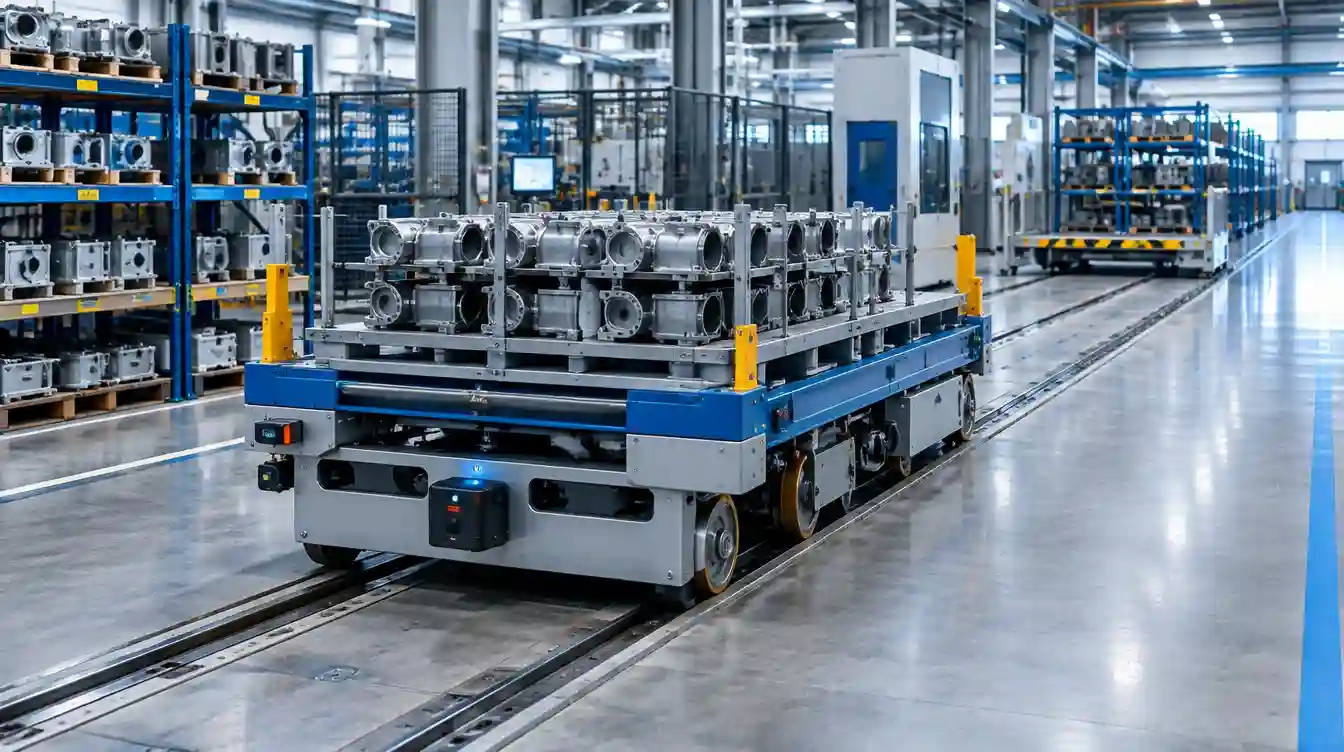
Electrical track vehicle system is a type of material handling system consisting of electrically driven vehicles operated on fixed or designated paths or tracks to carry material throughout a facility. Vehicles are set to operate on a predefined path to transfer materials from points of loading, production, storage, and points of unloading.
An electric track vehicle minimized the repeated manual movement. It brought about an organized system for internal transportation. In addition, when used together with the proper operating controls, it could be a kind of automated transport system that enables the business to better manage its material flow and synchronize its transportation to the business' production.
The Electrical track vehicle system working process starts by the loading materials on a proper electrical vehicle. Then the vehicle moved on track to its destination. Which track defines the path of the movement and electric power is used for starting an electrical vehicle and other transportation purposes.
With control system design, sensors and safety devices are used to detect objects, operate and optimize vehicle working conditions, and achieve safe-controlled motion. When reaching the destination, materials are unloaded by personnel or equipment, and then the vehicle can return or head to the second station. This kind of track guided vehicle system provides an excellent way to plan automated material movement to meet specific needs.
An electric track vehicle runs along the assigned or predetermined route between operational points. Track based transport system offer a path for defined movement reducing unwarranted route deviation and providing consistent transportation. When designing for the track based vehicle system, vehicle size, track configuration, etc need to be taken into account to ensure a smooth process.
Controls manage vehicle operation, scheduled stops, and flow of transports between stations. Depending on automated transport system sophistication, sensors and route control functions can allow positioning, obstacle detection, and handling sequence management. This material handling automation helps match transport operations with production, storage, and other internal operations.
Electrical track vehicle systems are used in industries for the movement of materials at a fixed interval. Here are some of the electrical track vehicle system applications:
These can be a component of an industrial material handling system and can be used to create regular movement paths within a plant.
Transfer of production materials involves moving parts, raw materials, tools and finished goods between production phases. An electrical track vehicle system may enable scheduled deliveries down a fixed route while reducing the risk of uncontrolled material movement to maintain consistent material availability at workstations. This automated industrial transport can streamline production and internal logistics.
Transferring the materials from either storage or picking area to the other. A track based vehicle system uses a track to move materials, containers and other supplies along a fixed route. When connected to warehouse operations, internal logistics automation systems can bring benefits to vehicle movement and repeatability.
Here are some of the electrical track vehicle system benefits:
Actual benefits vary based on system design and deployment, facility shape, operational volume and how the solution integrates with existing processes.
The decision to material flow automation accelerates collaboration between production workstations, storage locations and industrial lines. Set guided routes and programmed timetable enable vehicles to assist with delivered materials on demand and limit non-planned waiting periods. This can lead to better industrial productivity when vehicle transportation is included in operational processes.
An Automated material handling system removes the drudgery of a worker having to pick a matching load from one location and transport it to another. Material transport automation frees up staff to be busy with work that needs supervision, decision making or sophisticated skills. The value of this improvement varies based on load type, workflow, and automation.
Electrical track vehicle system vs manual handling both provide similar functions but the way material is moved around the facility is quite different.
| Comparison Factor | Electrical Track Vehicle System | Manual Material Transport |
|---|---|---|
| Movement Consistency | Follows predefined tracks and programmed routes for consistent transportation. | Depends on employee movement, task planning, and operating conditions. |
| Transport Speed | Supports predictable movement between designated locations. | Speed varies with workload, distance, load weight, and workforce availability. |
| Labor Dependency | Reduces the need for repetitive manual transportation. | Requires employees to perform or assist with material movement. |
| Route Control | Uses fixed tracks and designated routes for organized material flow. | Offers greater flexibility when routes or destinations change frequently. |
| Operational Safety | Can reduce certain manual handling risks when designed with appropriate safety features. | Requires proper handling techniques, training, and adherence to safety procedures. |
| Productivity | Supports recurring transport tasks and coordinated material delivery. | Can be effective for low-volume or irregular transportation requirements. |
| Scalability | Expansion may require track modifications, system upgrades, or additional vehicles. | Can often be adjusted by reallocating workers and handling equipment. |
| Best Suited For | Facilities with frequent, repetitive material movement between predefined locations. | Operations requiring flexible movement, occasional deliveries, or changing transport routes. |
For facilities with frequent, volume movement with a need for integrated layouts, an automated material transport system can ensure smooth movement.
An electric track vehicle system is really important to understand what the needs are for your transportation today and planning for tomorrow.
Vehicle capacity needs to be based on the weight, size and properties of the materials being moved. The optimum load handling system takes into consideration the load centre, how the load is to be handled and how the load is distributed. Confirm track vehicle capacity to ensure the configuration meets your application needs.
The design of a track layout should consider travel distance, available space, loading stations, offload points and frequency of movement. The design should match the specific workflow and facilitate adequate access for personnel and other machinery. Combining the automated material handling with the actual flow will prevent bottlenecks and de-routeing.
Electrical track vehicles systems role in industrial automation support connecting transportation of material with production, storage and distribution electrical track vehicles systems can be integrated with corresponding control platforms and other automated devices to realize the coordination of internal material transportation of the smart factory. It helps to formulate more planned transportation workflows, and increase the transparency of periodic logistics activities.
In areas where facilities are utilizing smart material handling systems, pre-programmed routes and automated vehicle movements may facilitate more consistent operation. At a transport layer these systems can be used to provide more resilient automated logistics and to help build a more structured, scalable internal transport.
Electrical track vehicle systems supply chain efficient material handling systems automate internal logistics by selecting a system that considers load and track configuration, safety, other facility requirements, and planning for future growth. Efficient, dependable material movement is key to successful operations.
|
Browse Airox Technologies for electrical track vehicle system solutions to find one that suits your operation and internal material flow needs.
|
An electrical track vehicle system uses transports materials between designated locations within facilities using electrically powered vehicles that follow predefined tracks or routes.
Manufacturing plants, warehouses, logistics centers, assembly facilities, healthcare environments, and other large complexes use these systems for controlled internal transportation.
It supports consistent movement, reduces repetitive manual transportation, and helps coordinate material deliveries between workstations, storage areas, and operational zones.
Yes. Vehicle configuration, dimensions, and load capacity can be selected according to the materials, weights, and handling requirements of each application.
Evaluate load capacity, route layout, travel distance, facility space, safety features, control requirements, maintenance needs, and future expansion plans.
Airox Technologies offers electrical track vehicles systems designed to support automated material transportation and improve internal logistics in suitable industrial and healthcare facilities.